
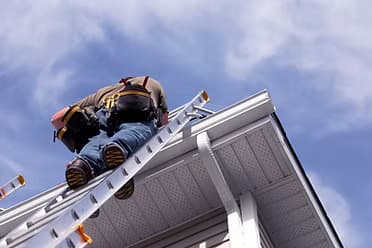
Why Gutters Pull Away—and Why It Matters
Sagging or separated gutters are more than a cosmetic problem. Learn what causes them and where displaced rainwater can go next.
A gutter usually starts to sag or separate when its fasteners, supporting wood, or drainage capacity can no longer handle the load. Catching the cause early can help keep roof runoff from reaching fascia, siding, landscaping, or the foundation.
Common reasons gutters move
- Leaves and debris hold water and add weight.
- Loose, corroded, or widely spaced fasteners lose their grip.
- Damaged fascia no longer provides a solid mounting surface.
- Improper pitch leaves standing water instead of directing it to a downspout.
- Ice and snow loads stress the gutter during winter weather.
Where the water goes instead
When the gutter edge drops, water can run behind the gutter, spill over the front, or collect in a low section. Depending on the location, that water may stain siding, erode soil, saturate fascia, or pool close to the home.
Repair, rehang, or replace?
A short loose section with sound fascia may only need to be rehung and pitched correctly. Bent runs, recurring overflow, widespread fastener failure, or damaged supporting wood can require a broader repair. The downspout layout and roof drainage area should be checked at the same time.
Keep roof runoff moving away from the home
Gerkin Construction can inspect the gutter run, fascia, hangers, pitch, and downspouts together so the recommendation addresses the drainage problem—not only the visible sag.
Keep reading
Related guides
 Gutters
Fall Gutter Cleaning: DIY or Call a Pro?
When to clean your gutters, what a good job looks like, and the signs it is time to hand the ladder to someone else.
Read the guideSee something around your home that does not look right?
Tell us what you are noticing. The Gerkin team can inspect the issue, document what we find, and explain the practical next step.